
TV REVIEW: ‘Stranger Things 5’ grinds to a halt (for now)
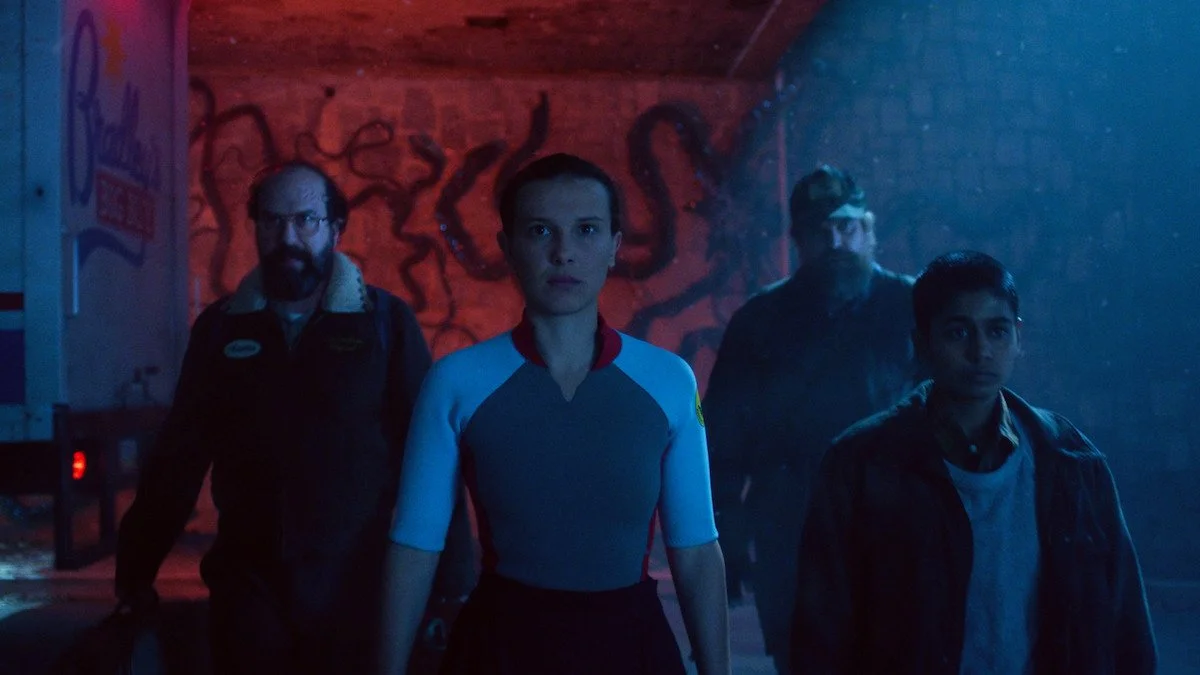
Millie Bobby Brown stars in Stranger Things 5, alongside (L-R) Brett Gelman, David Harbour and Linnea Berthelsen.
SPOILERS AHEAD for all of Stranger Things, including the fifth season and finale
Weirdly, Stranger Things found the most fitting way to finish off its main villain: seven or eight laborious chops of an axe to his neck, stretching out the moment far longer than necessary, all after Winona Ryder drops the Netflix show’s one and only F-bomb. This comes at the mid-point of a two-hour episode mostly staged in a CGI-extended netherworld, and is followed by a 45-minute tear-jerker of an epilogue. It encapsulated a show that’s now known more for its devotion to creating buzzy plot moments and speeches rather than satisfying (or logical) character development.
After nine years, ballooning lore, and a few too many movie-length episodes, I heard from many fans anecdotally who had lost patience for Netflix’s banner sci-fi/horror show. But there’s a certain catharsis in seeing how a show of this scale chooses to end its story. So how does Stranger Things measure up against other fantastical TV that ended after long runs? It’s nowhere near the disappointment of a Game of Thrones Season 8, but the final season is nevertheless a profound let-down compared to the promise in the early seasons.
The fifth season hits the platform after a three-year wait, which was apparently merited by the epic scope of the storytelling envisioned by Matt and Ross Duffer, the brothers who created and helmed the show since the beginning. To help explain this time gap (and the aging of the show’s young stars), we’re introduced to a Hawkins, Indiana under a military lockdown. The government has stormed in after an otherworldly attack in the season four finale by the series’ monstrous villain Henry Creel (Jamie Campbell Bower), better known as Vecna. Now, curfews, surveillance and a fortified town square are part of day-to-day life in the town.
The kids and some of their parents (Ryder’s Joyce Byers, David Harbour’s Jim Hopper) have become quasi rebel commandos, conducting late-night “crawls” into the Upside Down to try to find and kill Vecna. At the same time, they’re trying to keep Eleven (Millie Bobby Brown) clear of the military, wanting her to avoid becoming a lab rat once again. As a result, the nostalgic 80s vibes that defined the series are almost non-existent, clearing the way for endless montages of explaining plans to extract information, invade characters’ minds and free various captives.
It’s pretty hard to recap and review an entire season of TV in one post, so let me drill into a couple of the major notes that have stuck with me since the finale aired.

Eleven faces off with Vecna inside the Mind Flayer.
The Vecna Fight
Eleven has been training for her entire life to use her telekinetic powers effectively (and not bleed out through her nose). Given that Vecna is shown in most of his appearances to be the most powerful wielder of these abilities, viewers would expect a final showdown between Eleven and Vecna to show off the limits of their skills. The reality was a lot more disappointing. Facing off inside the kaiju-scale spider body of the Mind Flayer (wut?), Eleven and Vecna push each other around the space for a couple of minutes, barely making contact with their Jedi-like invisible jabs. Only when Eleven’s friends attack the Mind Flayer from outside can Eleven push Vecna onto a toothlike spike, impaling him long enough for Joyce to swing the aforementioned axe.
It reads a little too much like the sometimes-memed wizard fight between Gandalf and Saruman in The Fellowship of the Ring; two characters weakly shoving each other without many martial arts thrills. The better strategy would have been to take inspiration from a show like Avatar: The Last Airbender, and the final fight between Aang and Fire Lord Ozai. In that scene, the fight goes through multiple phases with impressively choreographed sequences that prove the frightening elemental powers of the combatants. The final fight in Stranger Things doesn’t give Brown a chance to show how Eleven has developed, and it robs the scene of the satisfaction that it should give viewers to see a tough opponent like Vecna defeated.
Then there’s that F-bomb I mentioned. It’s a classic example of a sequence designed to be memed and reshared, much like Molly Weasley’s showdown with Bellatrix Lestrange in the final Harry Potter film. We’re supposed to cheer at the “edgy” use of adult language in a family-oriented show, even if it makes no sense in context. Wouldn’t countless other dramatic moments throughout the show have merited swearing by the characters? And if the producers are so concerned about cussing to limit it to one line, why include it at all, especially in a series with such prominently gory scenes? I’d argue that the poor, impressionable kids in the audience have a lot more to worry about.
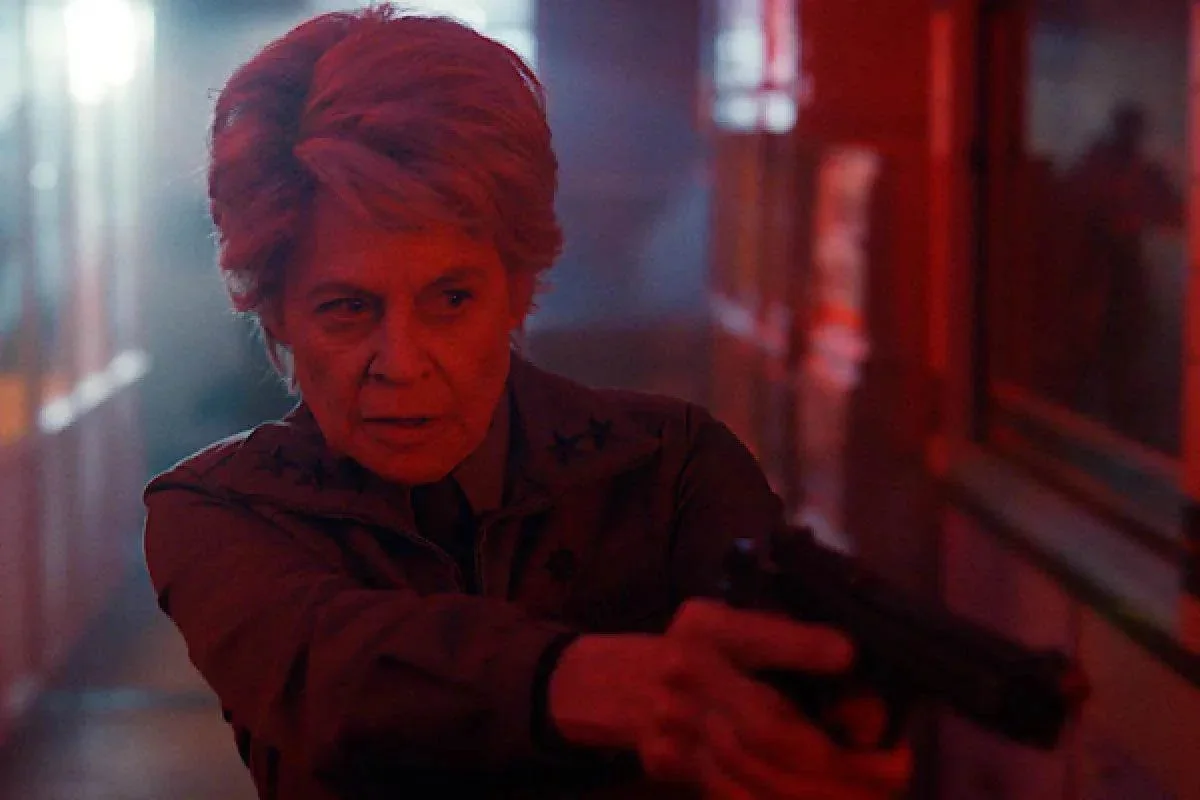
Linda Hamilton as the mysterious Dr. Kay.
The Military
The U.S. government has always been a presence in Stranger Things. In the first season, it was a Department of Energy program running experiments in Hawkins that (we discover later) unleashed Vecna on the world. Later, the armed forces took over that job, as they hunted for Eleven in an effort to control her and use her powers as a weapon.
Season five brought some new stunt casting for this gun-toting faction, with Linda Hamilton as the mysterious two-star general, Dr. Kay. It’s part of a tradition on the show that brought extended cameo appearances from 80s acting icons like Paul Reiser, Sean Astin, Matthew Modine, and others. Unfortunately, that’s about as far as the show wanted to take things. The military exists in season five as a minor irritant to the main characters – nowhere near as deadly as Vecna and his plans, but always on standby to slow down the heroes’ plans by chasing or detaining someone. They’re never much of a threat, making you suspicious that their scenes are just creaky ways to extend episode runtimes and keep people watching.
Worse than that, though, is how the military storyline ends. After killing Vecna, the heroes try to return to the real world through the big portal in the centre of town, only to be held at gunpoint by the military. But when Eleven mysteriously disappears and is presumed dead, Dr. Kay…gives up. We barely get a reaction shot or any sign of frustration from Hamilton, and the hero characters are allowed to waltz back to their lives. This is despite the fact that Nancy (Natalia Dyer), Hopper, and others in the core group are shown shooting and killing multiple soldiers. No prison time, no interrogation, just a time skip to the warm and fuzzy epilogue.
It’s a choice that does a disservice to Hamilton, who’s known for her portrayals of badass women like Sarah Connor in the Terminator series, and a choice that feels like a waste of the audience’s time. Why spend so many minutes of the preceding episodes on unravelling Kay’s mysterious plans only for her role to be written off with an “18 Months Later” title card?
Obviously a lot of these critiques can be rebuffed by arguing, “It’s just a sci-fi/fantasy show, don’t think too hard about it.” That’s true, though when a movie or a show struggles on a writing front, it’s harder and harder to suspend your disbelief. Your mind begins latching on to logical problems that you might have otherwise ignored. Which leads me to…
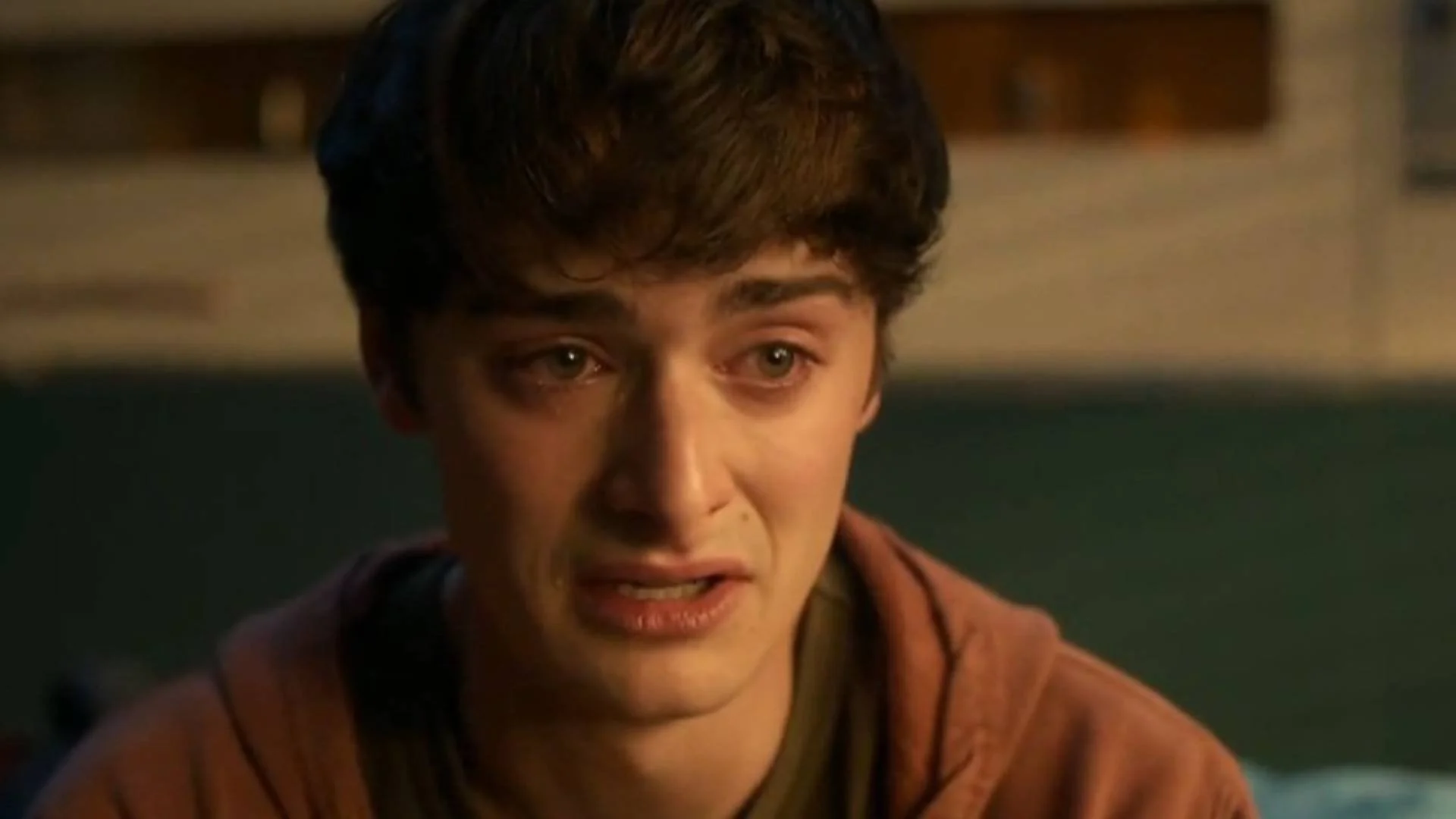
Noah Schnapp as Will Byers.
Speeches
The season is jammed with examples of grandstanding; sequences so overwrought that they push beyond the capabilities of the cast. Pretty much every character gets at least one moment to stand on a soapbox and tell us exactly how they feel: Hopper and Eleven arguing about Eleven’s suicide mission, Nancy and Jonathan while stuck in the melting room, Max on several occasions while trapped in Henry’s mind.
Then there’s the planning scenes. Over the years, plenty of viewers noticed that a decent chunk of the storytelling in Stranger Things amounts to characters explaining their plans to each other. A spooky problem will emerge, which demands a quirky, scrappy solution. Characters will grab nearby objects for visual demonstrations or scribble on chalkboards. An argument will ensue, as Mike or Lucas or Max or whoever complete each other’s sentences. Then someone will get a brainwave, coming up with an unexpected fix.
What started as a charming pattern (especially when the actors were younger) has gotten pretty hokey. In one episode this season, Robin (Maya Hawke), in discussing some concept, stands in front of a wall of vinyl records. She wants to use the records as stand-ins for people in a plan she’s formulating, but first she needs to find the perfect records to represent each person (Kate Bush’s Hounds of Love for Sadie Sink’s Max, obviously). It’s one of many examples of characters (who are usually in a rush to beat some kind of ticking clock in the narrative) dragging their feet so the show can have a flashy moment. It also reinforces the theory that certain high-value programming on streaming services is being specifically written in a laborious, over-explained style to coddle all the users mindlessly scrolling on a second device while they watch.
However, I don’t think writing for second-screen viewing (bleh) is behind one of the season’s most discussed moments: Will Byers’ coming out scene. The writers decided to put a melodramatic bow on a theme they’d half-heartedly been hinting at for the whole show. Will has long felt different than the other characters, and at first it’s assumed that he’s been infected by the Mind Flayer or Vecna. Only in season four does it become clearer that it’s a facet of his identity that he’s beginning to understand, which he wrestles with further in season five. By having Will come out as gay to his family and friends, the writers apparently wanted to structure the new season around Will overcoming the trauma he experienced from Vecna in season one. He rejects Vecna’s belief that Will is inherently weak, and discovers a new superpower in the process - both figuratively and literally.
But like the other “here’s the plan” scenes, this one grinds the episode to a halt. Placing it at this juncture in the story contradicts the heroes’ knowledge that they only have minutes before the world is destroyed. Like Ryder’s swearing later in the finale, the scene feels self-congratulatory; you can picture the writers looking around for approval afterwards, as if incorporating a tender moment of progressiveness will net them some extra social capital with fans.
What Happens Next?
I don’t envy the writers’ room on a show like Stranger Things. With such a complicated mythology and large cast, and the status of being a flagship show, there’s a ton of pressure to end the story in a way that closes off the unanswered questions and satisfies the viewers. Like Lost back in 2010 or even the Skywalker saga in the Star Wars movies, the writers’ grasp on the disparate bits of the Stranger Things lore often slips; in some cases, the fans actually do have a more complete understanding of the plot and its contradictions. And when questioned about their choices, the Duffer brothers’ answers amount to little more than a shrug.
Rumours abound about spinoff shows and (much less credibly) a secret episode that will address fan complaints. Maybe some of the gaps in this season are simply opportunities to branch out in a broader franchise of shows, much in the way Game of Thrones has been able to do. But I can’t help but feel that with the original series wrapping up, it’s as good of a reason as any to leave Hawkins behind. The series feels too stale, too performative, too willing to waste time and money to pay much attention to any more. For once, I actually identify with Finn Wolfhard’s Mike; in his final appearance on the show, he watches his sister discover Dungeons and Dragons with her friends, at which point he turns his back to the game to go eat lasagna. Pass the dish – I’m done with this campaign.
Stray thoughts
Vecna is shown to be able to deflect bullets and fire — could he repel a nuke? Seems like Molotov cocktails can hurt that kaiju Mind Flayer, after all!
The army doesn’t seem aware of Vecna or interested in pursuing him. What’s the point of creating an army of telekinetic soldiers if the world explodes? It’s like they exist on a different show!
What happened to Derek’s family after they woke up from being drugged and found their house destroyed?
Did anyone notice the radio station simply didn’t broadcast for days on end?
Does Mr. Wheeler remember being nearly killed by a monster?
Why would Kali agree to help Eleven disappear simply based on Hopper’s speech?